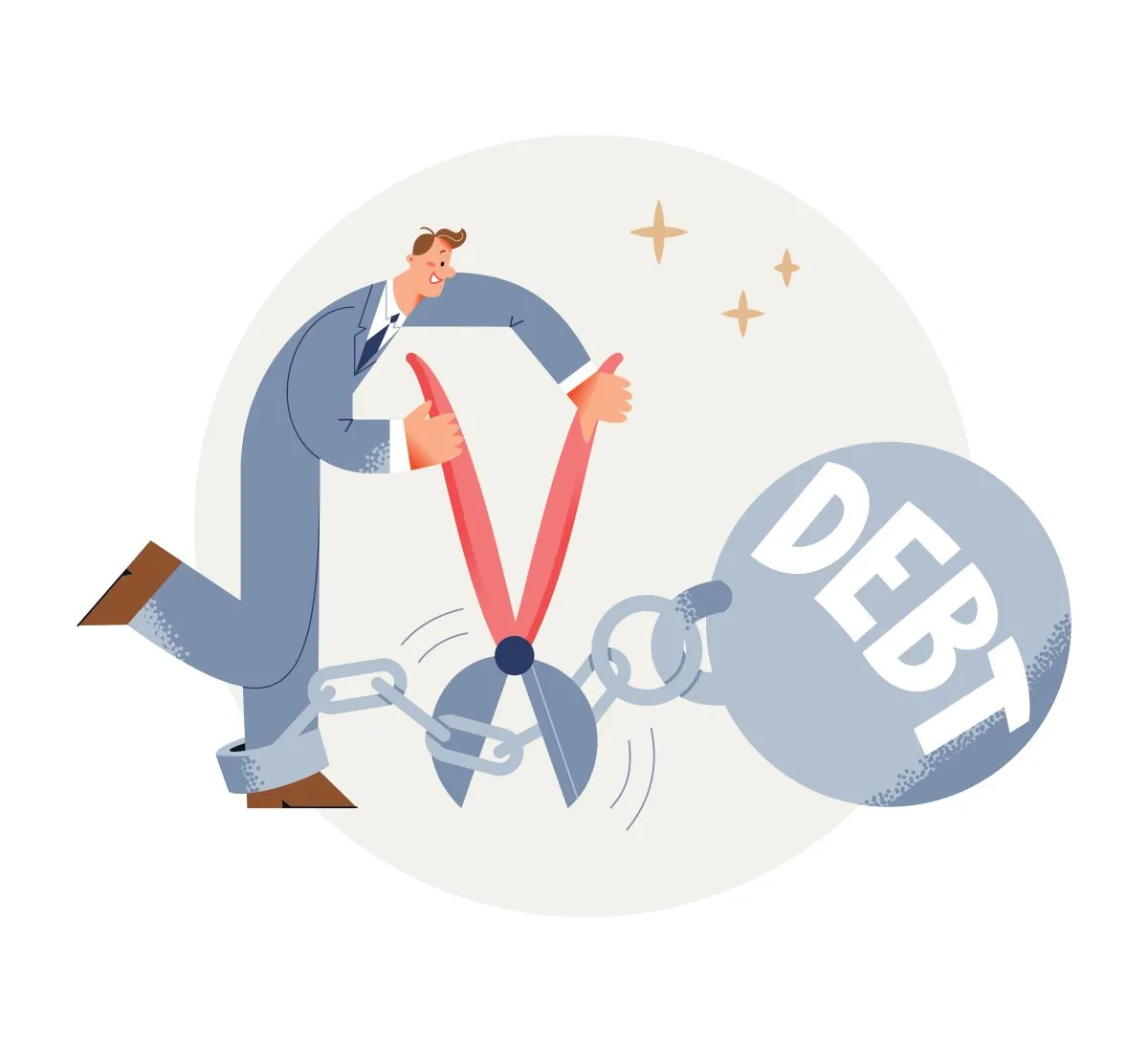
Debt has become harder to manage than ever. With average credit card interest rates hovering around 20%, many people feel like they are running uphill just to stay in the same place. Even when you make your minimum payments on time, a large chunk of your money goes straight to interest instead of reducing what you owe.
This is why debt consolidation has become such a popular strategy. For many households, it acts like a financial “reset button.” When done correctly, it can lower interest costs, simplify monthly payments, and give you a clear timeline to becoming debt-free. But when done poorly, it can make things worse.
In this guide, we’ll break down smart debt consolidation in plain English. You’ll learn what it is, why it matters in a high-interest environment, and how to follow a step-by-step plan that actually works.
Why high interest rates make debt so dangerous
Interest is the hidden enemy of your finances. When credit card rates climb toward 20% or higher, debt becomes incredibly expensive. For example, if you owe $10,000 on a card with a 20% APR, you could end up paying thousands of dollars in interest over time—especially if you only make minimum payments.
High interest rates also slow down progress. Even when you feel like you’re paying regularly, your balance barely moves. This can be discouraging and lead to financial stress, missed payments, or even taking on more debt just to get by. Debt consolidation helps by lowering or eliminating interest, at least temporarily, so more of your money goes toward the actual balance, as confirmed by the debt professionals at www.debtreliefkarma.com.
What is debt consolidation, in simple terms?
Debt consolidation means combining multiple debts into one single payment, ideally with a lower interest rate. Instead of juggling several credit cards with different due dates and rates, you move the balances into one place.
There are two common ways people do this:
One option is using a 0% APR balance transfer credit card, which lets you move existing credit card debt onto a new card with no interest for a set period, often 12 to 21 months.
The other option is taking out a personal loan, using it to pay off your credit cards, and then paying back the loan at a fixed interest rate over time.
Both methods can work well, but only if you understand the rules and commit to changing your habits.
Why debt consolidation feels like a “reset button”
The biggest benefit of consolidation is psychological as much as financial. When you reduce interest and simplify payments, debt suddenly feels manageable again.
Instead of watching balances barely shrink, you can see real progress. Instead of tracking five different due dates, you focus on one. This sense of control often motivates people to stay consistent and avoid falling back into old habits. However, a reset only works if you don’t hit the reset button again by taking on new debt.
Step one: Calculate your total debt
Before you do anything else, you need to know exactly where you stand. Many people underestimate how much they owe because they avoid facing the full picture.
Start by listing every debt you have. This includes credit cards, store cards, and any personal loans. Write down the balance, the interest rate, and the minimum payment for each.
You don’t need fancy software. A simple spreadsheet or even a notebook works just fine. The goal is clarity. When you see all your debt in one place, it becomes easier to decide which consolidation option makes sense. This step may feel uncomfortable, but it’s essential. You can’t fix what you don’t fully understand.
Step two: Check your credit score
Your credit score plays a major role in determining your consolidation options. For the best 0% APR balance transfer offers, you generally need a credit score of 690 or higher.
If your score is in this range, you’ll likely qualify for cards that offer long interest-free periods. This gives you a powerful window of time to pay down debt without interest eating away at your payments. If your score is lower, a personal loan may be a better option. While it may not offer 0% interest, it can still be much lower than credit card rates and provide predictable monthly payments.
Checking your score doesn’t hurt it, and knowing where you stand helps you avoid applying for offers you’re unlikely to get.
Understanding 0% APR balance transfer cards
Balance transfer cards are popular because they offer something rare: time without interest. During the promotional period, every payment you make goes directly toward reducing your balance.
This can save you hundreds or even thousands of dollars in interest. However, these cards come with important conditions that many people overlook.
Most balance transfers include a 3–5% transfer fee, which is added to your balance upfront. While this may sound like a drawback, it’s often far cheaper than paying high interest over time. The key is to make sure you can pay off most, if not all, of the balance before the 0% period ends.
Step three: Execute the transfer carefully
Once you’ve chosen a consolidation option, it’s time to act—but carefully. When transferring balances, always read the fine print.
Confirm how long the 0% period lasts, what the transfer fee is, and what the interest rate will be after the promotion ends. Set reminders for the end date so you’re not caught off guard by sudden interest charges.
If you’re using a personal loan, make sure the loan amount covers all the debt you want to pay off and that there are no hidden fees. This step is where many people rush. Taking a few extra minutes to understand the terms can save you a lot of money later.
Step four: Create a realistic paydown plan
Debt consolidation works best when paired with a clear repayment plan. Don’t just make the minimum payment and hope for the best.
Look at your budget and decide how much extra you can realistically pay each month. Even small increases can make a big difference when interest is low or zero.
If you’re using a 0% APR card, divide your balance by the number of months in the promotional period. This gives you a target monthly payment to be debt-free before interest kicks in. Having a plan turns consolidation from a temporary fix into a long-term solution.
The “No-New-Debt” rule explained
This rule is simple but powerful: once you consolidate, stop using your old credit cards immediately.
Many people make the mistake of freeing up credit, then using it again. This leads to having the consolidated balance plus new charges, doubling the debt instead of reducing it. Put your old cards away, freeze them if necessary, or remove them from your digital wallet. Use cash or debit for daily spending until your debt is under control.
Consolidation is not about creating space to spend more. It’s about creating space to recover.
Why discipline matters more than strategy
No consolidation method can fix spending habits on its own. The math may look good, but behavior is what determines success. This doesn’t mean you have to live miserably or never enjoy yourself. It means being intentional. Track your spending, set limits, and check in with yourself regularly.
Small lifestyle adjustments—like cooking more meals at home or delaying non-essential purchases—can accelerate your progress and keep you motivated.
Common mistakes to avoid
One common mistake is choosing consolidation without addressing the reason the debt happened in the first place. If the root cause is ignored, debt often returns.
Another mistake is focusing only on interest rates and ignoring fees or repayment timelines. A slightly higher rate with better terms can sometimes be the smarter choice.
Finally, many people underestimate how long it takes to change habits. Be patient with yourself and focus on consistency rather than perfection.
Is debt consolidation right for everyone?
Debt consolidation is a powerful tool, but it’s not a magic solution. It works best for people who are committed to paying down debt and willing to change their spending habits.
If your income is unstable or your debt is extremely high, other options—such as credit counseling—may be worth exploring. The goal is not just to move debt around, but to eliminate it in a sustainable way. If you’d like to know more about your options when it comes to tackling high debt, visit DebtReliefKarma today.
Turning a reset into real freedom
In a high-interest environment, smart debt consolidation can be the difference between staying stuck and moving forward. By lowering interest, simplifying payments, and following the no-new-debt rule, you give yourself a real chance to regain control.
The process doesn’t require financial expertise—just honesty, planning, and discipline. When used correctly, consolidation isn’t just a reset button. It’s a bridge to long-term financial freedom. If you take it one step at a time and stay consistent, you’ll be surprised how quickly progress adds up.